
Key Takeaways
- Engaging in speech therapy activities through games and play can make communication practice more enjoyable while encouraging verbal interaction and social skills.
- Visual aids such as flashcards, pictures, and charts can strengthen word recognition, comprehension, vocabulary, and expressive communication.
- Technology-based exercises and speech therapy apps provide interactive ways to practice communication skills and encourage independent learning.
- Mirror exercises and other supportive techniques can help individuals improve articulation and become more aware of mouth movements and facial expressions.
- Repetition is essential for reinforcing speech patterns, strengthening recall, and building confidence through consistent practice.
- Parents and caregivers can incorporate speech practice into everyday routines, creating natural opportunities for children to develop vocabulary and communication skills.
- Setting achievable goals and celebrating progress can motivate individuals to continue practicing and build confidence throughout the communication journey.
Play-Based Games That Encourage Verbal Interaction
Play is one of the most effective ways to make speech practice engaging, especially for children. Games that require players to name objects, answer questions, describe pictures, or communicate with others can naturally encourage verbal interaction.
Classic games such as Scrabble, Pictionary, charades, and word-matching games can be adapted to target specific communication goals. For example, Pictionary encourages participants to describe objects and ideas, while word games can help improve vocabulary and sentence formation.
Role-playing is another valuable option. Children can pretend to order food at a restaurant, visit a doctor, or meet a new friend. These activities allow them to practice realistic conversations in a comfortable environment.
To make play-based exercises more effective:
- Choose games that match the individual’s communication level.
- Encourage complete words and sentences when appropriate.
- Give participants enough time to respond.
- Use positive reinforcement after successful communication.
- Gradually introduce more challenging vocabulary and conversation topics.
The goal is to make communication practice feel natural rather than like a repetitive assignment. When individuals enjoy an activity, they are often more motivated to participate and continue practicing.
Aids for Building Vocabulary and Comprehension
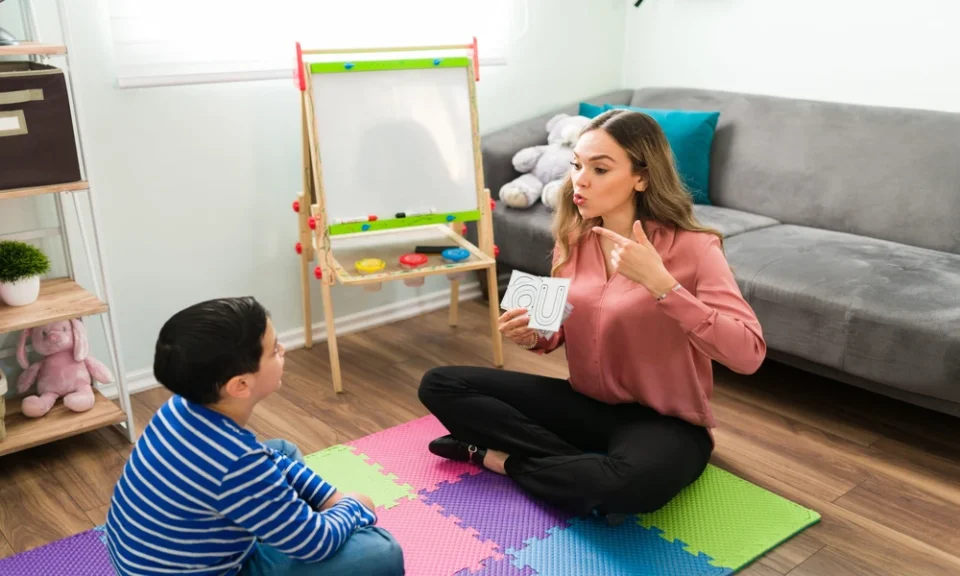
Visual aids can make communication easier by connecting words with images and familiar objects. Flashcards, photographs, illustrations, and picture books are simple tools that can support both receptive and expressive language skills.
Start with familiar items, such as food, clothing, animals, or household objects. Ask the individual to identify each picture, name it, describe it, or use it in a sentence. As communication improves, introduce more complex images that encourage longer responses.
For example, a picture of a kitchen can lead to questions such as:
- What do you see?
- What is the person doing?
- What do you use to cook?
- What might happen next?
Charts and visual sequences can also help individuals understand processes. A series of pictures showing how to make a sandwich, for example, can encourage them to explain each step using words and complete sentences.
Using visual aids can help reduce frustration when someone struggles to find the right word. Images provide a helpful reference point and can make it easier to connect concepts with language.
Technology-Based Speech and Communication Exercises
Technology has created new opportunities for individuals to practice communication skills outside traditional therapy sessions. Speech-focused apps, interactive games, and digital exercises can provide additional practice while making learning more engaging.
Depending on individual needs, technology can support:
- Vocabulary development.
- Pronunciation practice.
- Listening comprehension.
- Word recognition.
- Sentence formation.
- Reading and language skills.
Interactive applications may also provide immediate feedback, helping users recognize areas that need improvement. Some tools allow exercises to be adjusted according to skill level, making them suitable for beginners and more advanced learners.
Technology should complement professional guidance rather than replace it. A speech-language pathologist can help families select appropriate tools and determine how digital exercises fit into an individual’s overall communication plan.
When used consistently and appropriately, technology can give individuals additional opportunities to practice communication skills and build confidence.
Mirror Exercises for Improving Articulation
Mirror exercises provide a simple way to increase awareness of facial movements and articulation. By watching themselves speak, individuals can observe how their lips, tongue, and jaw move during different sounds.
This activity can be particularly useful for individuals working on articulation or recovering from communication difficulties following a neurological event. The person can practice simple sounds, words, or short phrases while watching their mouth in the mirror.
For example, practice may begin with individual sounds before progressing to:
- Simple words.
- Short phrases.
- Complete sentences.
- Everyday conversations.
Family members can participate by modeling sounds and providing gentle encouragement. The goal is not perfection but increased awareness and confidence.
Creating a supportive environment is important. Individuals should feel comfortable making mistakes and trying again without fear of criticism. Positive reinforcement can make practice more enjoyable and encourage continued participation.
Repetition and Structured Speech Practice
Repetition is a fundamental part of communication development. Practicing the same sounds, words, or phrases repeatedly can help reinforce learning and improve recall.
A structured session might focus on a specific communication goal. For example, an individual working on the “S” sound may practice the sound independently, then use it in words and eventually incorporate those words into sentences.
A simple progression might include:
- Practicing individual sounds.
- Repeating target words.
- Using words in short phrases.
- Creating complete sentences.
- Applying the skill during natural conversation.
While repetition is valuable, sessions should still be varied enough to maintain interest. Combining structured exercises with games, storytelling, and real-world conversations can prevent practice from becoming monotonous.
Consistent practice is often more beneficial than occasional long sessions. Setting realistic goals and recognizing incremental improvements can help individuals stay motivated.
Everyday Activities That Build Communication Skills
Some of the best communication practice can happen during ordinary daily routines. Parents, caregivers, and family members can turn cooking, shopping, reading, and household chores into opportunities to practice language.
While preparing a meal, for example, a parent can ask the child to name ingredients, describe colors, follow instructions, or explain what happens next. During grocery shopping, the child can practice identifying products, asking questions, or choosing between two options.
Other everyday opportunities include:
- Reading a book together and discussing the story.
- Asking questions about a favorite television show.
- Describing objects around the house.
- Talking about activities completed during the day.
- Singing songs and practicing rhymes.
- Giving simple instructions and following directions.
These activities are valuable because they connect communication skills to real-life situations. Instead of practicing isolated words, individuals learn how language is used in everyday interactions.
For children, parents can make these activities more engaging by incorporating their interests. A child who loves animals, for example, may be more motivated to describe animal pictures or tell stories about their favorite pets.
Storytelling and Role-Playing for Conversation Skills
Storytelling is an excellent way to develop vocabulary, sentence structure, sequencing, and conversational confidence. Individuals can be encouraged to describe a personal experience, retell a familiar story, or create a fictional narrative.
Start with simple prompts such as:
- What did you do today?
- What happened at school?
- Tell me about your favorite game.
- What would you do if you found a lost puppy?
As skills improve, introduce more complex storytelling challenges. Ask the individual to explain what happened first, next, and last. This helps develop sequencing and encourages more organized communication.
Role-playing can also prepare individuals for real-world interactions. Scenarios such as ordering food, introducing themselves, asking for help, or talking to a teacher provide practical communication opportunities.
These exercises can be adapted to different ages and abilities. The focus should be on encouraging participation, improving clarity, and helping individuals become more comfortable expressing their thoughts.
Tracking Progress and Maintaining Motivation
Setting clear goals is an important part of successful communication practice. Goals should be realistic, measurable, and appropriate for the individual’s needs.
For example, a goal might involve:
- Learning five new vocabulary words each week.
- Practicing a specific sound daily.
- Speaking in complete sentences.
- Participating in a short conversation.
- Following multi-step instructions.
Keeping a simple progress log can help individuals and caregivers recognize improvements over time. Recording new words learned, successful conversations, or communication milestones can provide valuable motivation.
Celebrating small achievements is equally important. Progress may sometimes happen gradually, but each improvement represents an important step forward.
Professional guidance can also help ensure that exercises are appropriate. A speech-language pathologist can evaluate communication needs, establish individualized goals, and recommend suitable activities for continued practice at home.
FAQ
What are some effective speech therapy activities for children?
Effective activities include play-based games, storytelling, picture cards, reading, singing, role-playing, and everyday conversations. The best activities are those that match the child’s communication goals and interests.
How can visual aids help with communication?
Visual aids connect words and concepts with images, making it easier to understand and remember new vocabulary. They can also help individuals express ideas when they have difficulty finding the right words.
Can technology be used for speech practice at home?
Yes. Speech and language apps, interactive games, and digital exercises can provide additional practice at home. However, technology is generally most effective when used alongside guidance from a qualified speech-language professional.
How does repetition improve speech skills?
Repetition helps reinforce sounds, words, and language patterns. Regular practice can improve recall and make communication skills easier to use during everyday conversations.
What can parents do to support speech development?
Parents can encourage communication during everyday activities such as cooking, reading, shopping, and playing. Asking questions, expanding on a child’s answers, and encouraging them to describe their experiences can provide valuable practice.
Are storytelling activities helpful for communication?
Yes. Storytelling can improve vocabulary, sentence formation, sequencing, listening, and conversational skills. It also gives individuals an opportunity to express ideas in a structured but creative way.
How can I make speech practice more enjoyable?
Use activities that reflect the individual’s interests. Games, songs, favorite books, technology, crafts, and role-playing can make practice feel less like work and more like an enjoyable part of the day.
How should communication progress be tracked?
Progress can be monitored by recording specific goals and observing changes in vocabulary, articulation, comprehension, and conversational ability. Regular evaluations with a speech-language pathologist can provide a more comprehensive assessment of progress.
